Microsoft Fabric is an integrated analytics and data platform designed to meet the needs of large enterprises. It combines various services like data processing, ingestion, transformation, and real-time event routing into a single platform. With its capabilities spanning Data Engineering, Data Science, Real-Time Analytics, and more, Microsoft Fabric makes it easier for businesses to manage their data and generate actionable insights without needing separate services from different vendors.
Microsoft Fabric operates on a Software as a Service (SaaS) model, making it user-friendly and simplifying the integration of complex systems. Its unified architecture brings together several tools, including Power BI, Azure Synapse Analytics, and Azure Data Factory, into a seamless stack. The core data storage is centralized in OneLake, a unified data lake that removes the need for separate databases or data warehouses. With embedded AI capabilities, Fabric helps users move raw data into valuable business insights effortlessly.
Key Capabilities of Microsoft Fabric
Microsoft Fabric offers powerful features to enhance productivity and streamline data management:
- Role-Specific Workloads: Custom solutions designed for different roles within the organization.
- One Lake: A unified data lake that simplifies storage and access to data.
- AI-Powered Features: Copilot tools that suggest intelligent solutions and automate tasks.
- AIntegration with Microsoft 365: Streamlined collaboration across tools for better productivity.
- Unified Data Management: Simplifies data governance, sharing, and access.
Key Features of Microsoft Fabric
Microsoft Fabric is packed with powerful features, making it a standout choice for businesses looking to streamline their data operations. Some key features include:
Integration Capabilities
Microsoft Fabric can integrate with a wide range of data sources, from cloud platforms to on-premise systems. This flexibility ensures that businesses can continue to use their existing data infrastructure seamlessly. Whether your organization is based in Delhi, Bangalore, or Noida, or operating globally, Microsoft Fabric supports:
- Cloud Integrations: Azure, AWS, Google Cloud, and more.
- On-Premise Systems: Seamless connectivity with legacy databases and ERP systems.
- APIs and Connectors: Pre-built connectors for popular business applications, enabling faster data flow and automation.
Scalability and Performance
Built on Azure’s robust cloud infrastructure, Microsoft Fabric offers unparalleled scalability and performance. It adapts to growing data needs, ensuring that performance remains optimal even with large volumes of data. Key highlights include:
- Auto-Scaling: Dynamically adjusts resources based on workload demands.
- Controllers Security:Ensures continuous operation with minimal downtime.
- Optimized Data Processing: Handles real-time analytics and large datasets efficiently.
Security Features
Security is a cornerstone of Microsoft Fabric, employing top-tier measures to protect sensitive business data. It ensures compliance with industry standards and provides robust data governance. Core security features include:
- Advanced Encryption: Data encryption at rest and in transit.
- Role-Based Access Control (RBAC): Granular permissions to manage user access effectively.
- Compliance Certifications: Adherence to global security standards like GDPR, HIPAA, and ISO certifications.
- Integrated Threat Detection: Proactive monitoring to identify and mitigate potential security risks.
Microsoft Fabric empowers businesses with a secure, scalable, and integrated data platform, driving efficient data operations and informed decision-making.
Unification with the SaaS Foundation
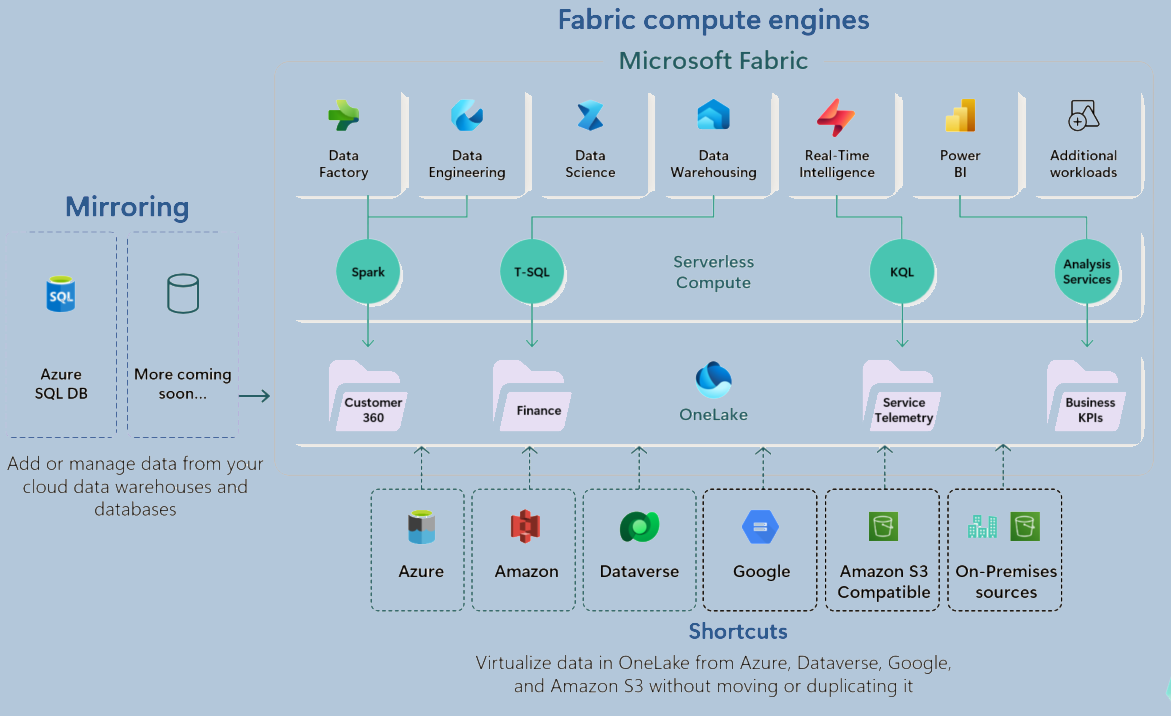
Built on a SaaS foundation, Microsoft Fabric integrates various services from Power BI, Azure Data Factory, and more into a single, tailored environment. By providing role-specific experiences, it ensures that users can access the tools and capabilities they need. The platform enhances collaboration, security, and governance, with features like automatic permission management and data sensitivity labels. Governance is powered by Purview, ensuring comprehensive oversight.
How Does Microsoft Fabric Work?
Microsoft Fabric operates as an integrated data analytics platform, designed to simplify the process of collecting, transforming, and analyzing data across an organization. Its architecture is built to support diverse data processing needs, from batch processing to real-time analytics.
1. Data Ingestion
- Sources: Data can be ingested from various sources like databases, cloud storage, IoT devices, social media, ERP systems, and third-party applications.
- Tools Used: Fabric leverages Data Factory for ETL (Extract, Transform, Load) processes, enabling seamless data ingestion at scale.
- Real-Time & Batch: Supports both real-time streaming data (for quick insights) and batch processing (for handling large data volumes over time).
2. Unified Storage with OneLake
- OneLake: Acts as a centralized data lake, similar to OneDrive, where all ingested data is stored.
- Data Accessibility: Data is stored once but can be accessed by multiple tools, eliminating the need for data duplication.
- Data Types: Supports structured, semi-structured, and unstructured data formats.
3. Data Processing & Transformation
- Lakehouse Architecture: Combines the flexibility of data lakes with the performance of data warehouses.
- Data Engineering: Uses Spark-based processing for large-scale data transformations.
- Low-Code/No-Code: Business users can perform data preparation without writing code, while developers can use advanced scripting for complex workflows.
4. Advanced Analytics & AI Integration
- Real-Time Analytics: Handles streaming data for instant insights, critical for industries like finance, healthcare, and e-commerce.
- AI & Machine Learning: Integrates with Azure Machine Learning to build predictive models and advanced analytics workflows.
5. Data Visualization with Power BI
- Seamless Integration: Power BI is natively integrated, enabling users to create interactive dashboards and reports directly from Fabric’s datasets.
- Live Dashboards: Supports real-time data visualization, helping businesses make data-driven decisions instantly.
6. Governance, Security, and Compliance
- Data Governance: Powered by Microsoft Purview for data cataloging, lineage tracking, and compliance management.
- Security: Offers enterprise-grade security with role-based access control, encryption, and compliance certifications.
7. Scalability and Cost Efficiency
- Elastic Scaling: Automatically scales resources based on data load and processing demands.
- Cost Optimization: The pay-as-you-go pricing model helps organizations control costs effectively.
Key Takeaways
Microsoft Fabric works by:
- Ingesting data from multiple sources (real-time & batch)
- Storing it centrally in OneLake
- Processing and transforming the data using advanced analytics tools
- Visualizing insights with Power BI
- Ensuring security, governance, and scalability throughout the data lifecycle
Components of Microsoft Fabric
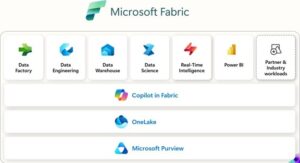
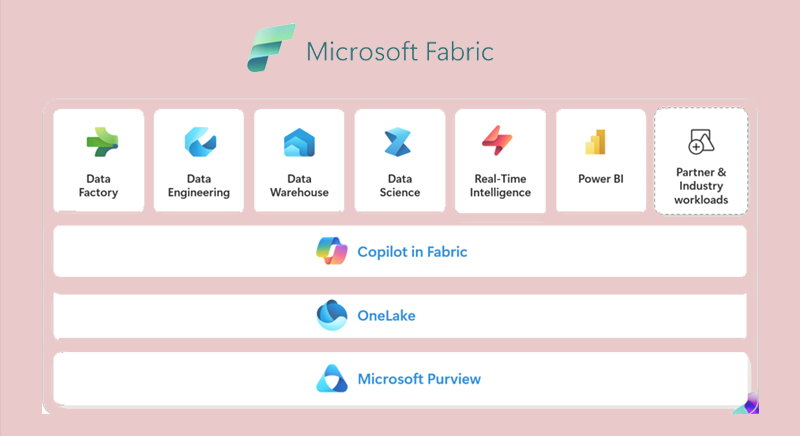
Fabric offers a complete suite of tools that work together seamlessly, each designed for specific tasks and user personas:
- Power BI: Helps users connect to data sources, visualize insights, and share findings Easily.
- Database: Developer-friendly databases like Azure SQL for operational data management.
- Data Factory: A modern data integration service that simplifies data ingestion, transformation, and preparation.
- Industry Solutions: Tailored solutions for specific industries, addressing unique data needs.
- Real-Time Intelligence: Supports event-driven and streaming data for real-time insights.
- Data Engineering: A Spark-based platform for processing and analyzing large datasets.
- Data Science: Enables building, deploying, and managing machine learning models.
- Data Warehouse: Provides scalable, high-performance data storage and analytics.
Microsoft Fabric and Cloud Computing
One of the biggest advantages of Microsoft Fabric is its strong integration with cloud computing. Microsoft Fabric is designed to work seamlessly in cloud environments, especially within Microsoft’s Azure ecosystem. This close connection offers many benefits for businesses:
Cost Efficiency
Cloud computing Migration helps businesses save money by removing the need for expensive on-premises hardware. Companies don’t have to spend on maintenance or upgrades, which reduces overall costs. Microsoft Fabric leverages this by providing cloud-based services that are cost-effective.
Flexibility and Accessibility
Since Microsoft Fabric is cloud-based, users can access their data and applications from anywhere with an internet connection. This makes it easier for teams to work remotely, improving flexibility and productivity across different locations.
Scalability
Microsoft Fabric allows businesses to scale their resources up or down based on demand. This means companies can easily handle changes in data usage without worrying about infrastructure limits. It’s perfect for businesses with varying workloads, ensuring efficiency at all times.
OneLake: The Unified Data Lake
OneLake is the foundation of Microsoft Fabric. Built on Azure Data Lake Storage (ADLS) Gen2, it serves as a single storage location for all data. OneLake eliminates data silos by providing a unified storage system that simplifies governance and security enforcement. It also supports "shortcuts" to external data, allowing users to access and share data without duplicating it, thus reducing costs.
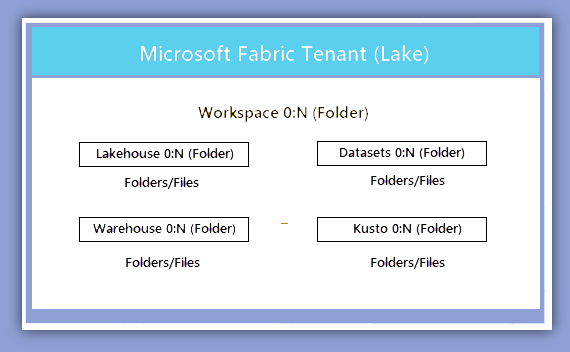
OneLake and Lake House Hierarchy
OneLake organizes data in a hierarchical structure, making it easy to manage across teams and regions. Users can create multiple workspaces and lake houses to store, process, and analyze data. A lake house acts as a database over a data lake, helping businesses manage data more efficiently. The platform ensures seamless integration and no extra configuration is required.
Real-Time Hub: Unifying Data Streams
The Real-Time hub is a central location for managing data in motion. It enables users to easily discover, ingest, and consume streaming data from various sources, including Microsoft services and external clouds. This hub is crucial for real-time applications, providing a unified view of data streams across the organization.
Fabric Solutions for ISVs
Independent Software Vendors (ISVs) can integrate their solutions with Microsoft Fabric in several ways:
- Interop:Basic integration with the One Lake foundation.
- Develop on Fabric:Build solutions on top of the Fabric platform.
- Build a Fabric Workload:Create customized workloads tailored to the Fabric ecosystem.
Microsoft Fabric and Cloud Computing
One of the biggest advantages of Microsoft Fabric is its strong integration with cloud computing. Microsoft Fabric is designed to work seamlessly in cloud environments, especially within Microsoft’s Azure ecosystem. This close connection offers many benefits for businesses:
Cost Efficiency
Cloud computing helps businesses save money by removing the need for expensive on-premises hardware. Companies don’t have to spend on maintenance or upgrades, which reduces overall costs. Microsoft Fabric leverages this by providing cloud-based services that are cost-effective.
Flexibility and Accessibility
Since Microsoft Fabric is cloud-based, users can access their data and applications from anywhere with an internet connection. This makes it easier for teams to work remotely, improving flexibility and productivity across different locations.
Scalability
Microsoft Fabric allows businesses to scale their resources up or down based on demand. This means companies can easily handle changes in data usage without worrying about infrastructure limits. It’s perfect for businesses with varying workloads, ensuring efficiency at all times.
The Future of Microsoft Fabric
Microsoft Fabric is expected to become a key part of data management strategies for organizations in the future. It will continue to evolve with new features and capabilities and is expected to be adopted widely across industries.
What's Expected in the Future of Microsoft Fabric?
Increased Adoption
Microsoft Fabric is expected to be adopted by more businesses, especially as it becomes more widely known and its benefits become more apparent.
More AI and ML Capabilities
Microsoft Fabric will continue to integrate AI and machine learning (ML) technologies, making it easier for organizations to develop AI-powered solutions.
Improved Governance and Compliance
Microsoft Fabric will provide better tools to help organizations ensure their data is secure and compliant with regulations.
Support for More Data Sources
Microsoft Fabric will support more data sources and connectors, making it easier for organizations to connect their data.
Real-Time Analytics
Microsoft Fabric will continue to offer real-time analytics capabilities
Benefits of Microsoft Fabric
- Streamlined Data Management: Microsoft Fabric helps organizations streamline data management processes.
- Better Business Decisions: It enables organizations to make informed, data-driven business decisions.
- Reduced Delivery Time and Improved Efficiency: Microsoft Fabric helps reduce project delivery times and boosts operational efficiency.
- Focus on High-Value Activities: Data analysts can focus on higher-value activities instead of routine data management tasks.
In conclusion, Microsoft Fabric is a comprehensive platform that simplifies data management and analytics for enterprises. It integrates various tools and services into a single, cohesive system that empowers businesses to transform their data into actionable insights easily and securely.
This version simplifies the language, removes some technical jargon, and condenses the content for easier understanding. Let me know if you need further adjustments!